Evaluating Robotics Vendors and How to Choose the Right Partner

November 25, 2025

Evaluating Robotics Vendors and How to Choose the Right Partner

A practical guide to making smarter, lower-risk automation decisions.

As robotics adoption accelerates across manufacturing, logistics and e-commerce, choosing the right automation partner has never been more critical. But despite billions invested in automation every year, many enterprise evaluations still focus on the wrong things – flashy demos, price comparisons or one-off pilot results rather than the deeper architectural factors that determine long term success.

The result? Projects that stall. Pilots that never scale. Systems that become unmaintainable. And automation strategies that fail to deliver meaningful ROI.

To reduce risk and maximize value, enterprises must evaluate robotics vendors through a more strategic lens. Here’s what companies commonly overlook and what actually matters when selecting the right long-term partner.

Want help finding the right automation partner?

Want help finding the right automation partner?

Reliability: More Important Than “Cool Technology”

Many evaluations prioritize what a robot can do under controlled conditions instead of how reliably it performs during real world operations. Performance at 9 a.m. in a demo booth doesn’t matter if it fails during peak season on a night shift.

Where Evaluations Often Miss

  • Prioritizing demos over uptime data
  • Ignoring Mean Time Between Failure (MTBF)
  • Assuming predictable performance across SKU changes
  • Underestimating environmental variability

What Actually Matters

A dependable robotics system should be:

  • Field proven
  • Resilient to SKU and layout changes
  • Designed for continuous operation
  • Architected for consistency, not gimmicks

Without reliability, nothing else matters.

Ecosystem Strength: You’re Not Buying a Robot, You’re Buying an Architecture

Enterprises often evaluate robots in isolation, ignoring the bigger automation ecosystem. But real-world deployments rely on WMS integration, PLCs, vision systems, safety devices, AMRs, conveyors and human workflows.

Where Evaluations Miss

  • Selecting point solutions that can’t integrate
  • Overlooking communication between systems
  • Ignoring compatibility with future robots or applications
  • Locking into closed or proprietary architectures

What Actually Matters

A scalable automation ecosystem should include:

  • A unified intelligent control layer (like MujinOS)
  • Multi-vendor compatibility
  • Centralized perception and planning
  • Modular expansion without redesign

If each robotic system is its own island, scaling becomes nearly impossible.

Time to Value: Speed of Deployment Determines ROI

Many enterprises underestimate how long it takes to go from installation to stable production. Deployment delays and excessive tuning time erode ROI more than any line item on a quote.

Where Evaluations Miss

  • Ignoring integration complexity
  • Tolerating long commissioning periods
  • Overlooking required engineering hours
  • Treating “tuning” as an unavoidable phase

What Actually Matters

A strong robotics partner delivers:

  • Fast, repeatable deployment
  • Automated calibration and environment mapping
  • Intuitive user interfaces
  • Stable throughput within days, not months

Time-to-value is one of the biggest ROI drivers in automation.

Long-Term Support: The Hidden Differentiator

Reliable long-term support is often the deciding factor between automation that scales and automation that slowly dies.

Where Evaluations Miss

  • Not asking about software update frequency
  • Overlooking remote diagnostics capability
  • Assuming internal staff can maintain complex systems
  • Ignoring how the vendor monitors performance

What Actually Matters

A dependable vendor provides:

  • Proactive system monitoring
  • Remote troubleshooting and event playback
  • Frequent updates with meaningful improvements
  • A dedicated support structure, not a hotline

Support is not an afterthought; it’s the backbone of long-term success.

Scalability: If It Can’t Scale, It’s Not a Solution

The biggest pitfall enterprises fall into is selecting solutions that work for one site but break when rolled out across many.

Where Evaluations Miss

  • Treating pilots like final solutions
  • Allowing excessive customization
  • Ignoring the need for standardization across sites
  • Failing to test system behavior under variability

What Actually Matters

A scalable solution requires:

  • Standardized task logic
  • Unified operator experience
  • Centralized monitoring
  • Performance repeatability across facilities

If a vendor can’t support multi-site deployment, they’re not enterprise ready.

So How Do Enterprises Choose the Right Robotics Partner?

Look beyond the robot. Look at the architecture, the reliability, the ecosystem, the time to value, the long-term support structure and the scalability roadmap.

Where MujinOS Helps Enterprises Make the Right Decision

This is exactly where MujinOS becomes a strategic advantage.

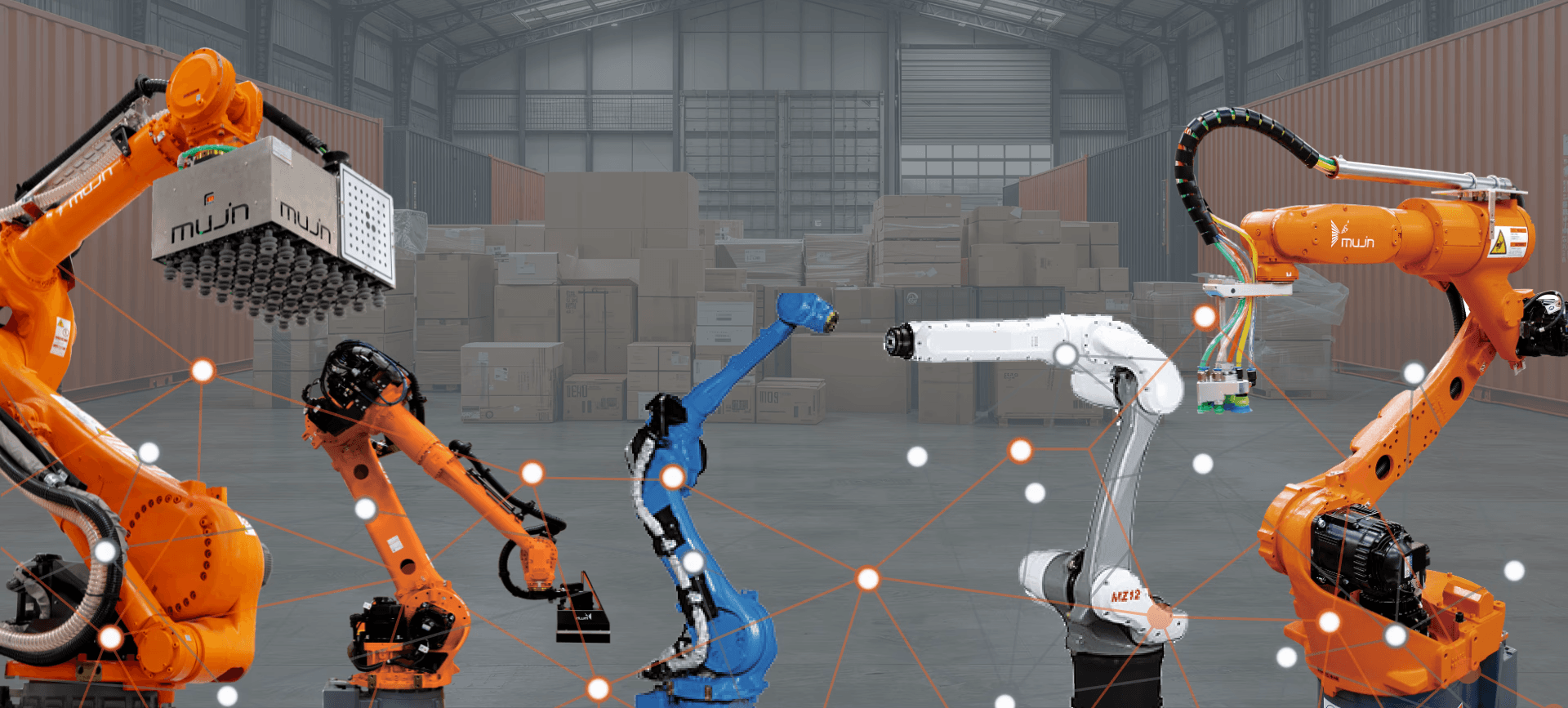
Enterprises don’t just need robots, they need a unified brain that brings intelligence, predictability and scalability to every system on the floor.

MujinOS empowers better vendor selection by providing:

A standardized control layer for all robots, brands applications Enterprise wide visibility with real time data, event playback and dashboards Consistent performance across sites, SKUs and workflows Faster deployments using automated environment mapping and teacherless optimization Long-term flexibility without lock-in to any one OEM or integrator A future proof ecosystem designed to add new applications without re-engineering

With MujinOS as the backbone, enterprises can evaluate vendors by their true capabilities, not by demos, promises or one-off pilot results. It brings transparency, accountability and architectural stability to every automation decision.

In short: MujinOS reduces the risk of choosing the wrong vendor and increases the ROI of choosing the right one.

See how MujinOS turns robotics challenges into real-world results.

Need to automate palletizing?

Share This Story:

Media Contact

Jeremy Fultz, Mujin Corp jeremy.fultz@mujin-corp.com >

Follow Us