

Technology
Learn about the platform powering today's most advanced automation applications
Learn more about MujinOS
Learn about the platform powering today's most advanced automation applications
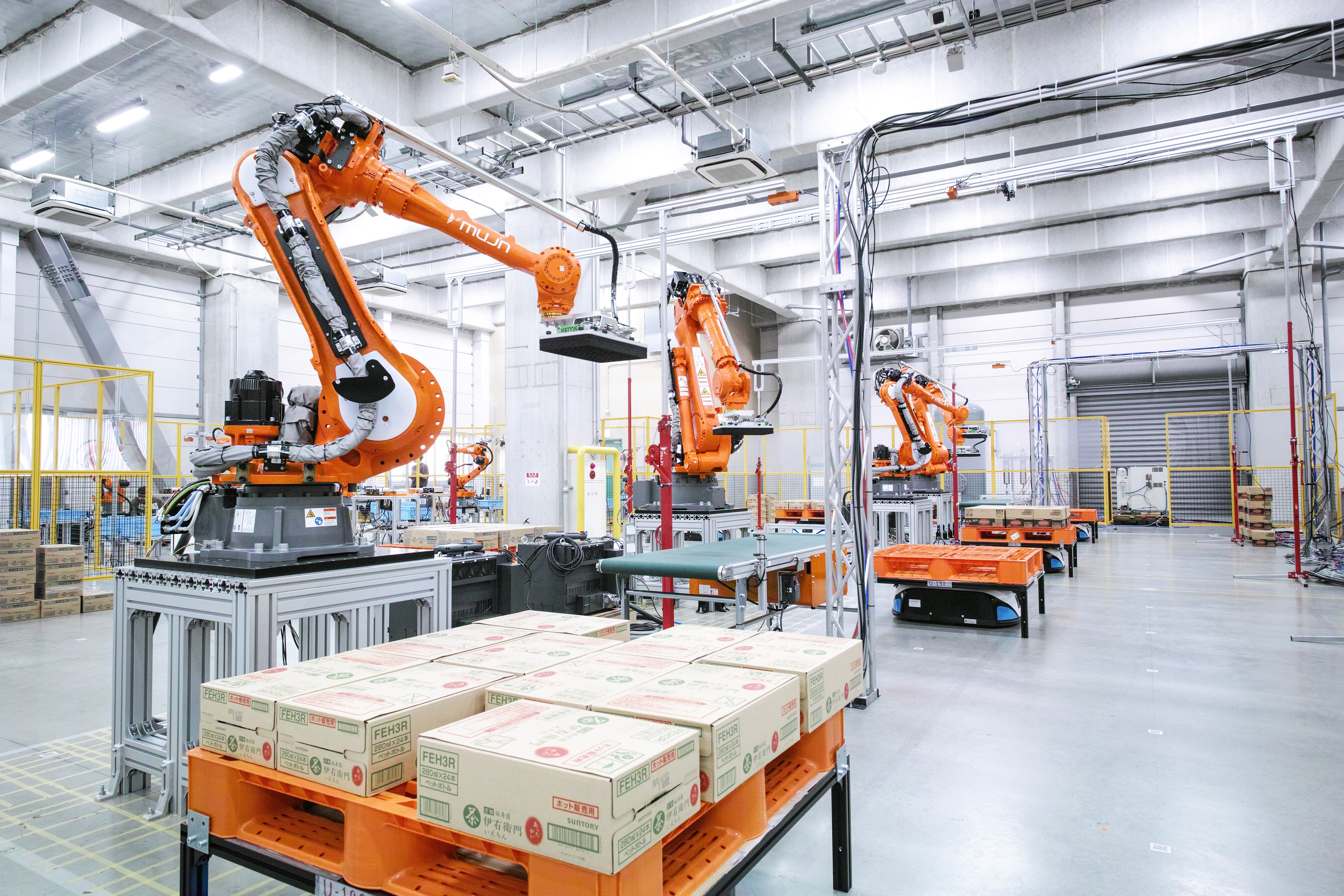
Not All Warehouse AI Is Created Equal — Here's What to Look For (and What to Run From)
Not All Warehouse AI Is Created Equal — Here's What to Look For (and What to Run From)
AI isn't coming to your warehouse. It's already there.
Scheduling tools, pick path optimization, demand forecasting, robotic coordination — AI is showing up across warehouse operations at a pace that isn't slowing down. Operators are being handed new systems regularly, and the pressure to adopt is real.
But not all warehouse AI is built for the realities of your floor. There is helpful warehouse AI and then there is AI that sounded good when you bought it, but causes headaches on the warehouse floor.
It’s important to know the difference before you sign — not after.
4 Red Flags Your Warehouse AI Is Working Against You
Red Flag #1: It Requires Your Workers to Become Software Experts
When a new AI system arrives in a warehouse, it typically brings new interfaces, new logic, and new workflows that land squarely on the frontline workers that were hired to move product — not to master robotics software.
This isn't a small problem. Logistics and warehousing currently ranks 4th among all industries for the gap between AI adoption and workforce readiness. That means AI tools are arriving on the floor faster than workers can realistically learn to use them. The fallout is predictable: productivity drops during the transition, frustration builds, and employees who feel unprepared start looking for the exit.
Red Flag #2: The Implementation Timeline Keeps Slipping
You were told six weeks. It's now been four months. Consultants are still on-site. Scope keeps expanding. The go-live date keeps moving.
When implementation timelines stretch beyond what was promised, it's usually a signal that the system wasn't built to integrate cleanly with your warehouse infrastructure. Connecting to an existing WMS, WES, or MES shouldn'ttake months of data cleanup. Systems designed for actual warehouse environments with open APIs and standard integration protocols, get up and running in weeks, not quarters.
Red Flag #3: It's a New Silo, Not a Connected System
Warehouse operations are already complex. The last thing your team needs is another disconnected system that doesn't talk to anything else.
AI that can't communicate with your existing warehouse management, execution, or fleet systems doesn't simplify operations — it adds to them. Every siloed layer is another interface to learn, another tool to monitor, and another point of failure that someone on your floor has to troubleshoot. When something goes wrong, "check the other system" is not a useful answer.
Warehouse AI should make your existing infrastructure smarter. If your just adding another complicated system into your warehouse, the integration work will eat your ROI before the technology ever delivers it.
Red Flag #4: You Can't See What It's Doing
Operational visibility isn't a nice-to-have. If your supervisors can't get clear, real-time insight into what the system is doing — and why — from a straightforward dashboard, you've handed control of part of your operation to a black box.
Good warehouse AI gives managers the ability to monitor performance, catch issues early, and make decisions quickly — from anywhere, not just while standing on the floor. If remote access and real-time monitoring aren't built in from the start, you'll find out what the system is doing only after something has already gone wrong.
What Good Warehouse AI Looks Like — And How MujinOS Delivers It
The red flags above aren't hypothetical. They're the result of deploying AI that was designed for a controlled environment rather than the complexity of a real warehouse operation.
MujinOS was built for what actually happens on the floor.
It handles the physically demanding, repetitive work — picking, palletizing, depalletizing — that labor shortages have made unsustainable for manual teams. As Mujin CEO Issei Takino noted in TechCrunch, automation today is increasingly a continuity tool: the core question isn't whether to automate, it's how to keep operations running with fewer available workers.
MujinOS adapts when things change. A real-time digital twin continuously mirrors the live environment, so new SKUs, layout shifts, and seasonal demand spikes don't trigger a reprogramming project. Traditional automation breaks when something changes but MujinOS adjusts.
It connects to what you already have. Open APIs and standardized protocols integrate directly with existing WMS, WES, and MES systems with no custom middleware, no months-long data migration, and no ripping outinfrastructure that's already working.
And it gives your team one interface that actually makes sense. A unified UI/UX means operators and supervisors work from the same dashboard, with remote access and real-time monitoring built in. Faster adoption, fewer errors, and no robotics expertise required to stay in control.
Real World: Trusco Nakayama
Trusco Nakayama, a global distributor of industrial tools, had fully automated transport, storage, and packaging — but outbound palletizing remained the last manual bottleneck. Traditional automation couldn't handle the variability: thousands of SKUs, constantly changing order profiles, diverse case sizes and weights. Conventional robots required rigid, pre-defined flows and highly custom programming that couldn't keep pace.
Partnering with Mujin and Yaskawa, they deployed an AI-driven mixed-SKU palletizing solution that responded in real time to variability — no rigid programming required.
The results:
500 cases per hour
Less than 0.05% error rate
Live in 6 weeks
The operation that was once the biggest bottleneck in the facility is now its most consistent, highest-throughput function — and it was running in six weeks, not six months.
The Right Question to Ask Before You Buy
Before your warehouse brings on any AI system, ask one question: was this built for the demo room, or for the floor?
The AI worth deploying is the kind your team can use on day one. It adapts when operations change. It connects to your existing infrastructure and makes it smarter — not obsolete. And when something happens at 2am, someone can see exactly what's going on without waiting for a consultant to call back.
If any system you're evaluating fails against these four red flags above, keep looking!
Learn More About MujinOS
Ready to see how MujinOS performs in real warehouse environments?
AI isn't coming to your warehouse. It's already there.
Scheduling tools, pick path optimization, demand forecasting, robotic coordination — AI is showing up across warehouse operations at a pace that isn't slowing down. Operators are being handed new systems regularly, and the pressure to adopt is real.
But not all warehouse AI is built for the realities of your floor. There is helpful warehouse AI and then there is AI that sounded good when you bought it, but causes headaches on the warehouse floor.
It’s important to know the difference before you sign — not after.
4 Red Flags Your Warehouse AI Is Working Against You
Red Flag #1: It Requires Your Workers to Become Software Experts
When a new AI system arrives in a warehouse, it typically brings new interfaces, new logic, and new workflows that land squarely on the frontline workers that were hired to move product — not to master robotics software.
This isn't a small problem. Logistics and warehousing currently ranks 4th among all industries for the gap between AI adoption and workforce readiness. That means AI tools are arriving on the floor faster than workers can realistically learn to use them. The fallout is predictable: productivity drops during the transition, frustration builds, and employees who feel unprepared start looking for the exit.
Red Flag #2: The Implementation Timeline Keeps Slipping
You were told six weeks. It's now been four months. Consultants are still on-site. Scope keeps expanding. The go-live date keeps moving.
When implementation timelines stretch beyond what was promised, it's usually a signal that the system wasn't built to integrate cleanly with your warehouse infrastructure. Connecting to an existing WMS, WES, or MES shouldn'ttake months of data cleanup. Systems designed for actual warehouse environments with open APIs and standard integration protocols, get up and running in weeks, not quarters.
Red Flag #3: It's a New Silo, Not a Connected System
Warehouse operations are already complex. The last thing your team needs is another disconnected system that doesn't talk to anything else.
AI that can't communicate with your existing warehouse management, execution, or fleet systems doesn't simplify operations — it adds to them. Every siloed layer is another interface to learn, another tool to monitor, and another point of failure that someone on your floor has to troubleshoot. When something goes wrong, "check the other system" is not a useful answer.
Warehouse AI should make your existing infrastructure smarter. If your just adding another complicated system into your warehouse, the integration work will eat your ROI before the technology ever delivers it.
Red Flag #4: You Can't See What It's Doing
Operational visibility isn't a nice-to-have. If your supervisors can't get clear, real-time insight into what the system is doing — and why — from a straightforward dashboard, you've handed control of part of your operation to a black box.
Good warehouse AI gives managers the ability to monitor performance, catch issues early, and make decisions quickly — from anywhere, not just while standing on the floor. If remote access and real-time monitoring aren't built in from the start, you'll find out what the system is doing only after something has already gone wrong.
What Good Warehouse AI Looks Like — And How MujinOS Delivers It
The red flags above aren't hypothetical. They're the result of deploying AI that was designed for a controlled environment rather than the complexity of a real warehouse operation.
MujinOS was built for what actually happens on the floor.
It handles the physically demanding, repetitive work — picking, palletizing, depalletizing — that labor shortages have made unsustainable for manual teams. As Mujin CEO Issei Takino noted in TechCrunch, automation today is increasingly a continuity tool: the core question isn't whether to automate, it's how to keep operations running with fewer available workers.
MujinOS adapts when things change. A real-time digital twin continuously mirrors the live environment, so new SKUs, layout shifts, and seasonal demand spikes don't trigger a reprogramming project. Traditional automation breaks when something changes but MujinOS adjusts.
It connects to what you already have. Open APIs and standardized protocols integrate directly with existing WMS, WES, and MES systems with no custom middleware, no months-long data migration, and no ripping outinfrastructure that's already working.
And it gives your team one interface that actually makes sense. A unified UI/UX means operators and supervisors work from the same dashboard, with remote access and real-time monitoring built in. Faster adoption, fewer errors, and no robotics expertise required to stay in control.
Real World: Trusco Nakayama
Trusco Nakayama, a global distributor of industrial tools, had fully automated transport, storage, and packaging — but outbound palletizing remained the last manual bottleneck. Traditional automation couldn't handle the variability: thousands of SKUs, constantly changing order profiles, diverse case sizes and weights. Conventional robots required rigid, pre-defined flows and highly custom programming that couldn't keep pace.
Partnering with Mujin and Yaskawa, they deployed an AI-driven mixed-SKU palletizing solution that responded in real time to variability — no rigid programming required.
The results:
500 cases per hour
Less than 0.05% error rate
Live in 6 weeks
The operation that was once the biggest bottleneck in the facility is now its most consistent, highest-throughput function — and it was running in six weeks, not six months.
The Right Question to Ask Before You Buy
Before your warehouse brings on any AI system, ask one question: was this built for the demo room, or for the floor?
The AI worth deploying is the kind your team can use on day one. It adapts when operations change. It connects to your existing infrastructure and makes it smarter — not obsolete. And when something happens at 2am, someone can see exactly what's going on without waiting for a consultant to call back.
If any system you're evaluating fails against these four red flags above, keep looking!
Learn More About MujinOS
Ready to see how MujinOS performs in real warehouse environments?
Hubspot
Set a portal ID and form in the Properties.
Have a question?
Learn how MujinOS delivers real-time perception, motion control, and no-code deployment—across any robotic system
Have a question?
Learn how MujinOS delivers real-time perception, motion control, and no-code deployment—across any robotic system