

Technology
Learn about the platform powering today's most advanced automation applications
Learn more about MujinOS
Learn about the platform powering today's most advanced automation applications
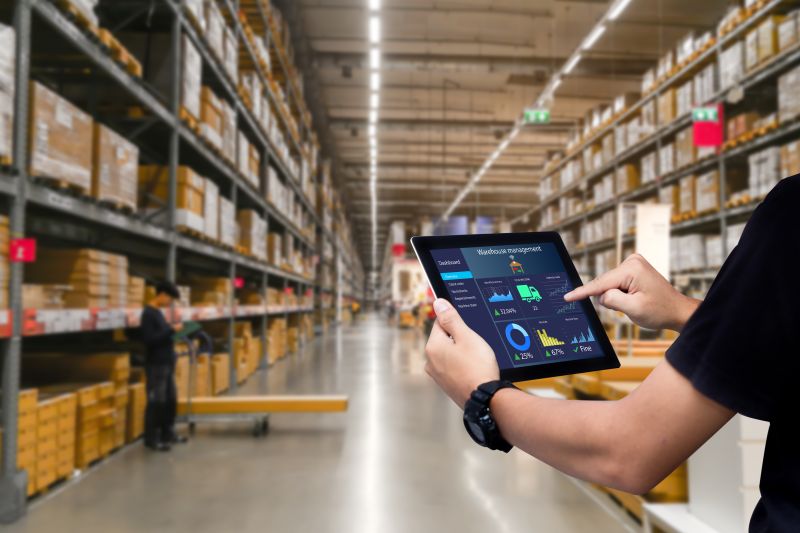
Why Plug and Play Robotics Is Still a Myth and What Warehouse Operators Actually Need
Why Plug and Play Robotics Is Still a Myth and What Warehouse Operators Actually Need
Simple automation sounds great, but the reality is far more complex.
“Plug and play robotics” has become one of the most overused phrases in the automation industry. In theory, it promises robots you can unbox, power on and deploy instantly with no integration, no engineering and no complexity.
But warehouse operators know the truth: real warehouse environments are messy, variable and full of interconnected systems that don’t behave like a demo cell. And despite what marketing slogans suggest, true plug-and-play automation simply doesn’t exist at industrial scale.
So why does the myth persist? And what do warehouse operators actually need instead?
Let’s break it down.
The Myth: “Robots Should Work Right Out of the Box”
It’s easy to understand why this belief is popular: installing automation is perceived as too slow, too expensive and too engineering heavy.
But the idea that robots can “automatically” integrate into warehouse environments ignores the realities of modern warehouses:
Every site layout is different
Every SKU has unique variations
Safety systems must be validated
Robots need perception, logic and motion planning
Shuttles, AGVs, WMS/WES systems all behave differently
Workflows evolve constantly
A plug and play robot might work in a booth, but not where uptime is critical and variability is nonstop.
The Reality: Industrial Automation Isn’t a Gadget
Manufacturing environments involve high mix SKUs, safety constraints, unpredictable material flow and constant change. In this world, hardware alone doesn’t solve the problem.
Successful automation requires:
Robust perception
Dynamic motion planning
Real time decision making
System level coordination
Seamless integration with existing equipment
Resilience under abnormal conditions
These are not “features” - they are prerequisites for the reliability that warehouse operators require.
This is why so many “simple” robotics solutions work during pilots, but fail to scale.
The Hidden Cost of “Simple Robots”: Endless Integration
When a robot lacks intelligence, the complexity shifts downstream:
Months of integration
Custom code for each SKU
Manual tuning
Endless troubleshooting
Reprogramming for every change
High dependence on limited expert resources
The promise of simplicity becomes a cycle of engineering fatigue and hidden costs which is exactly what warehouse operators are trying to avoid.
What Warehouse Operators Actually Need: Plug and Operate, Not Plug and Play
Warehouse operators do not need robots that pretend to be simple.
They need automation that is easy to operate, fast to deploy and resilient in real production conditions.
That requires a layer of intelligence above the hardware with a platform that handles:
Perception
Planning
Control
Optimization
Data capture
Device coordination
In other words: a unified operating system for automation.
And this is where MujinOS changes the game.
MujinOS: Where Warehouse Simplicity meets Industrial Performance
MujinOS isn’t about pretending automation is plug and play.
It’s about removing the complexity that makes automation hard while delivering true industrial grade performance.
How MujinOS enables “plug and operate” automation:
Automated environment understanding
Robots instantly map their surroundings and validate tasks without manual calibration.
Teacherless optimization
Motion paths, palletizing patterns and sequences are generated automatically with no coding, no tuning.
Unified control for all devices
Robots, AGVs, shuttles, storage systems and sensors operate under one real time orchestration layer.
Consistency across facilities
Standardized logic and interfaces reduce training time and eliminate multi-site variability.
Designed for high mix, high variability environments
Adaptive algorithms handle SKU changes, irregular packaging, exceptions and complex workflows automatically.
This is how automation becomes simple to operate, not simple on paper.
The Future: Intelligent Automation, Not Oversimplified Robotics
The industry doesn’t need more “plug and play” slogans.
It needs automation that:
Deploys faster
Operates more reliably
Adapts to real world complexity
Scales across facilities
Reduces engineering overhead
Empowers operators, not specialists
And that future will be driven by industrial automation platforms and not standalone robots.
The Bottom Line
Plug-and-play robotics is a myth because warehouse environments are too complex for simplistic solutions. But the future is brighter than the myth suggests.
With a unified intelligence layer like MujinOS, warehouse operators finally gain automation that is:
Easy to deploy. Easy to scale. Easy to operate.
And powerful enough for the most demanding warehouse operations.
This is how warehouses move beyond marketing promises and into real, sustainable automation.
Simple automation sounds great, but the reality is far more complex.
“Plug and play robotics” has become one of the most overused phrases in the automation industry. In theory, it promises robots you can unbox, power on and deploy instantly with no integration, no engineering and no complexity.
But warehouse operators know the truth: real warehouse environments are messy, variable and full of interconnected systems that don’t behave like a demo cell. And despite what marketing slogans suggest, true plug-and-play automation simply doesn’t exist at industrial scale.
So why does the myth persist? And what do warehouse operators actually need instead?
Let’s break it down.
The Myth: “Robots Should Work Right Out of the Box”
It’s easy to understand why this belief is popular: installing automation is perceived as too slow, too expensive and too engineering heavy.
But the idea that robots can “automatically” integrate into warehouse environments ignores the realities of modern warehouses:
Every site layout is different
Every SKU has unique variations
Safety systems must be validated
Robots need perception, logic and motion planning
Shuttles, AGVs, WMS/WES systems all behave differently
Workflows evolve constantly
A plug and play robot might work in a booth, but not where uptime is critical and variability is nonstop.
The Reality: Industrial Automation Isn’t a Gadget
Manufacturing environments involve high mix SKUs, safety constraints, unpredictable material flow and constant change. In this world, hardware alone doesn’t solve the problem.
Successful automation requires:
Robust perception
Dynamic motion planning
Real time decision making
System level coordination
Seamless integration with existing equipment
Resilience under abnormal conditions
These are not “features” - they are prerequisites for the reliability that warehouse operators require.
This is why so many “simple” robotics solutions work during pilots, but fail to scale.
The Hidden Cost of “Simple Robots”: Endless Integration
When a robot lacks intelligence, the complexity shifts downstream:
Months of integration
Custom code for each SKU
Manual tuning
Endless troubleshooting
Reprogramming for every change
High dependence on limited expert resources
The promise of simplicity becomes a cycle of engineering fatigue and hidden costs which is exactly what warehouse operators are trying to avoid.
What Warehouse Operators Actually Need: Plug and Operate, Not Plug and Play
Warehouse operators do not need robots that pretend to be simple.
They need automation that is easy to operate, fast to deploy and resilient in real production conditions.
That requires a layer of intelligence above the hardware with a platform that handles:
Perception
Planning
Control
Optimization
Data capture
Device coordination
In other words: a unified operating system for automation.
And this is where MujinOS changes the game.
MujinOS: Where Warehouse Simplicity meets Industrial Performance
MujinOS isn’t about pretending automation is plug and play.
It’s about removing the complexity that makes automation hard while delivering true industrial grade performance.
How MujinOS enables “plug and operate” automation:
Automated environment understanding
Robots instantly map their surroundings and validate tasks without manual calibration.
Teacherless optimization
Motion paths, palletizing patterns and sequences are generated automatically with no coding, no tuning.
Unified control for all devices
Robots, AGVs, shuttles, storage systems and sensors operate under one real time orchestration layer.
Consistency across facilities
Standardized logic and interfaces reduce training time and eliminate multi-site variability.
Designed for high mix, high variability environments
Adaptive algorithms handle SKU changes, irregular packaging, exceptions and complex workflows automatically.
This is how automation becomes simple to operate, not simple on paper.
The Future: Intelligent Automation, Not Oversimplified Robotics
The industry doesn’t need more “plug and play” slogans.
It needs automation that:
Deploys faster
Operates more reliably
Adapts to real world complexity
Scales across facilities
Reduces engineering overhead
Empowers operators, not specialists
And that future will be driven by industrial automation platforms and not standalone robots.
The Bottom Line
Plug-and-play robotics is a myth because warehouse environments are too complex for simplistic solutions. But the future is brighter than the myth suggests.
With a unified intelligence layer like MujinOS, warehouse operators finally gain automation that is:
Easy to deploy. Easy to scale. Easy to operate.
And powerful enough for the most demanding warehouse operations.
This is how warehouses move beyond marketing promises and into real, sustainable automation.
Follow us
Follow us
Have a question?
Learn how MujinOS delivers real-time perception, motion control, and no-code deployment—across any robotic system
Have a question?
Learn how MujinOS delivers real-time perception, motion control, and no-code deployment—across any robotic system