

Technology
Learn about the platform powering today's most advanced automation applications
Learn more about MujinOS
Learn about the platform powering today's most advanced automation applications
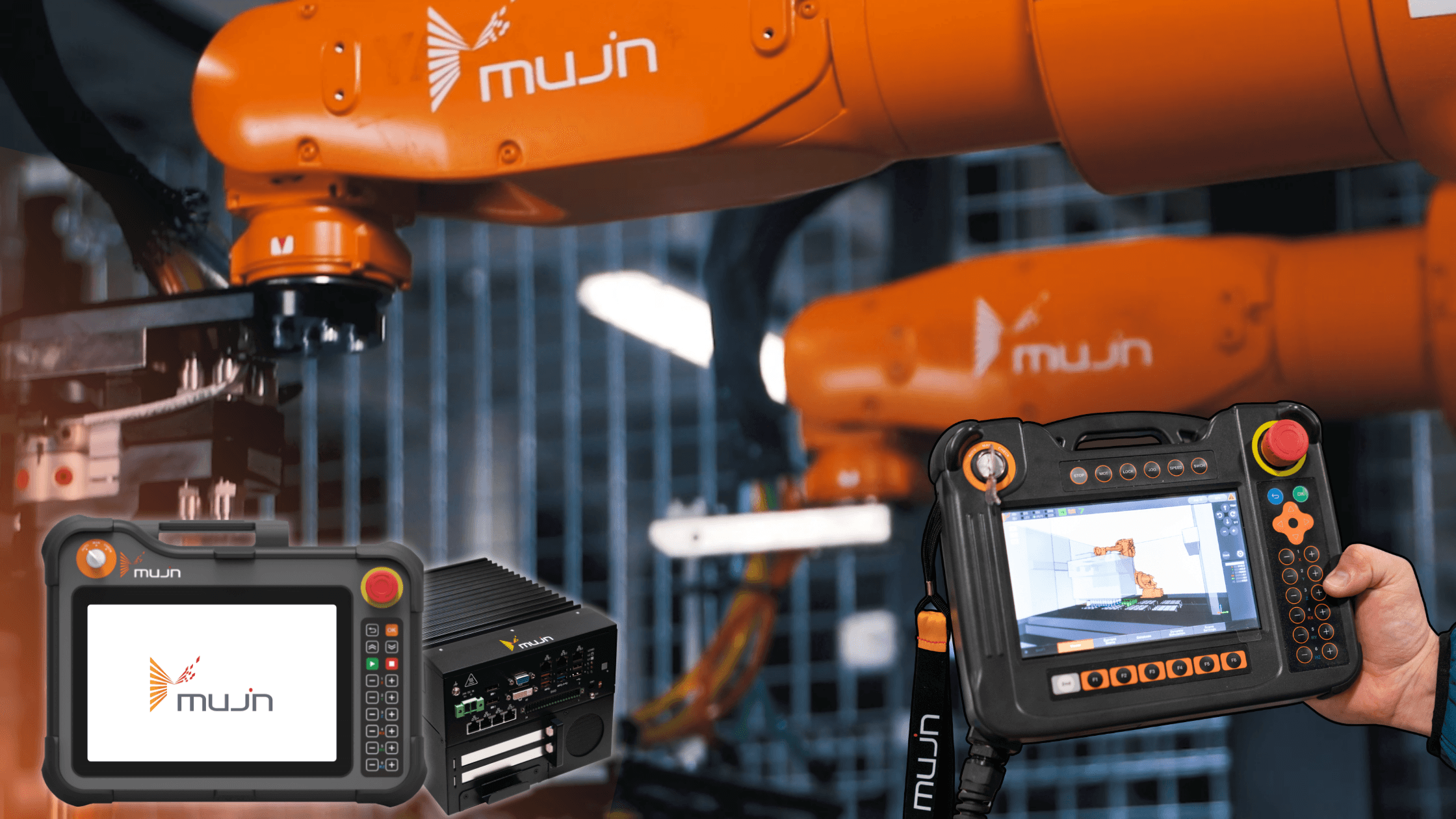
The Physical AI Advantage: How to Scale Faster Than Your Competition
The Physical AI Advantage: How to Scale Faster Than Your Competition
The numbers are no longer ambiguous. “97% of leaders are saying AI is already embedded in core workflows. The question is no longer if you use AI but how and to what extent,” says Nate Evans, Co-Founder and Head of Climate/AI at Fictiv. Speed of execution is now the defining competitive variable. The question dominating boardrooms and operations centers have shifted. The question is no longer whether to adopt Physical AI, but how fast you can scale it before your competitors do.
Yet for most operations leaders, the honest reality is this: deploying a robot is straightforward. Deploying intelligence across an entire facility, across multiple sites, across a mixed fleet of equipment from different manufacturers is where Physical AI initiatives stall.
The companies pulling ahead are not simply buying more robots. They are building a smarter operating layer underneath them.
The Operating System Approach to Physical AI
Mujin was built on a foundational premise: robots should not need to be told exactly what to do. They should be intelligent enough to figure it out.
Rather than programming individual robots for individual tasks, MujinOS creates a real-time digital twin of the entire facility — a living model that integrates robots, sensors, conveyors, and warehouse management systems into a single, unified control layer. When conditions change, the system adapts. When an obstacle appears, the robot reroutes. When throughput demands spike, the operation rebalances automatically, continuously, and without human intervention.
At MODEX 2026, Mujin demonstrated this in practice: four robots, four different manufacturers, zero humans in the loop and all orchestrated flawlessly by a single intelligent operating system. It was not a proof of concept. It was a production-ready demonstration of what Physical AI looks like when the execution layer is built for scale.
Four Ways MujinOS Accelerates Scale
For supply chain and operations leaders, the practical implications are significant.
Vendor-agnostic deployment. MujinOS works across robot manufacturers and applications, which means organizations are not locked into a single hardware ecosystem. As automation needs evolve, the intelligence layer evolves with them without tearing out and replacing the control infrastructure beneath.
Real-time adaptability. Static, pre-programmed automation breaks down when conditions change. MujinOS uses advanced perception, motion planning, and digital twin technology to continuously optimize workflows as real-world conditions shift, not just at deployment, but throughout the life of the operation.
Reduced operational risk at scale. Expanding automation across multiple sites is where operational risk traditionally intensifies. A standardized intelligent platform means consistent performance, consistent visibility, and consistent control — whether you are running one facility or twenty.
Accelerated time to value. Because MujinOS standardizes the intelligence layer across hardware and applications, the heavy integration work that typically slows deployment is dramatically reduced. Organizations can move from deployment to full productivity faster, and scale subsequent sites faster still.
The Competitive Window Is Narrowing
Physical AI is not a future state. It is a present-tense competitive race, and the leaders are already pulling away. The ones investing now in an intelligent execution foundation will find that each new deployment gets faster, each new site gets smarter, and the operational advantage increases over time.
The Physical AI advantage does not come from having the most robots. It comes from having the intelligence to make them work together at scale, in real time, without limits imposed by the hardware on the floor.
That is what MujinOS was built to deliver. And that is how the leaders of this race are pulling ahead.
The numbers are no longer ambiguous. “97% of leaders are saying AI is already embedded in core workflows. The question is no longer if you use AI but how and to what extent,” says Nate Evans, Co-Founder and Head of Climate/AI at Fictiv. Speed of execution is now the defining competitive variable. The question dominating boardrooms and operations centers have shifted. The question is no longer whether to adopt Physical AI, but how fast you can scale it before your competitors do.
Yet for most operations leaders, the honest reality is this: deploying a robot is straightforward. Deploying intelligence across an entire facility, across multiple sites, across a mixed fleet of equipment from different manufacturers is where Physical AI initiatives stall.
The companies pulling ahead are not simply buying more robots. They are building a smarter operating layer underneath them.
The Operating System Approach to Physical AI
Mujin was built on a foundational premise: robots should not need to be told exactly what to do. They should be intelligent enough to figure it out.
Rather than programming individual robots for individual tasks, MujinOS creates a real-time digital twin of the entire facility — a living model that integrates robots, sensors, conveyors, and warehouse management systems into a single, unified control layer. When conditions change, the system adapts. When an obstacle appears, the robot reroutes. When throughput demands spike, the operation rebalances automatically, continuously, and without human intervention.
At MODEX 2026, Mujin demonstrated this in practice: four robots, four different manufacturers, zero humans in the loop and all orchestrated flawlessly by a single intelligent operating system. It was not a proof of concept. It was a production-ready demonstration of what Physical AI looks like when the execution layer is built for scale.
Four Ways MujinOS Accelerates Scale
For supply chain and operations leaders, the practical implications are significant.
Vendor-agnostic deployment. MujinOS works across robot manufacturers and applications, which means organizations are not locked into a single hardware ecosystem. As automation needs evolve, the intelligence layer evolves with them without tearing out and replacing the control infrastructure beneath.
Real-time adaptability. Static, pre-programmed automation breaks down when conditions change. MujinOS uses advanced perception, motion planning, and digital twin technology to continuously optimize workflows as real-world conditions shift, not just at deployment, but throughout the life of the operation.
Reduced operational risk at scale. Expanding automation across multiple sites is where operational risk traditionally intensifies. A standardized intelligent platform means consistent performance, consistent visibility, and consistent control — whether you are running one facility or twenty.
Accelerated time to value. Because MujinOS standardizes the intelligence layer across hardware and applications, the heavy integration work that typically slows deployment is dramatically reduced. Organizations can move from deployment to full productivity faster, and scale subsequent sites faster still.
The Competitive Window Is Narrowing
Physical AI is not a future state. It is a present-tense competitive race, and the leaders are already pulling away. The ones investing now in an intelligent execution foundation will find that each new deployment gets faster, each new site gets smarter, and the operational advantage increases over time.
The Physical AI advantage does not come from having the most robots. It comes from having the intelligence to make them work together at scale, in real time, without limits imposed by the hardware on the floor.
That is what MujinOS was built to deliver. And that is how the leaders of this race are pulling ahead.
Hubspot
Set a portal ID and form in the Properties.
Have a question?
Learn how MujinOS delivers real-time perception, motion control, and no-code deployment—across any robotic system
Have a question?
Learn how MujinOS delivers real-time perception, motion control, and no-code deployment—across any robotic system